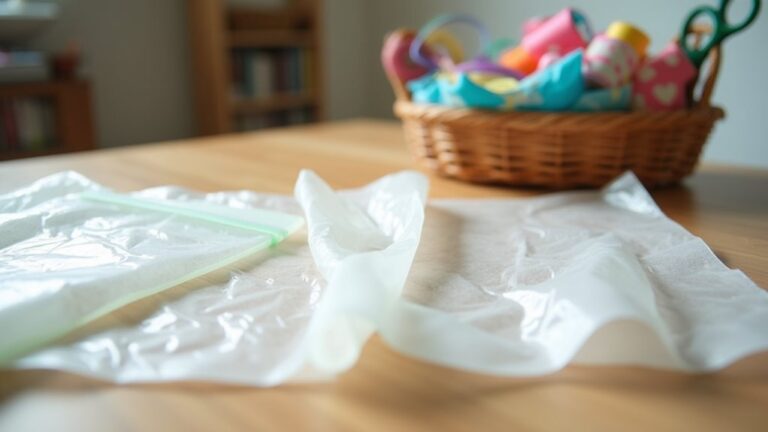
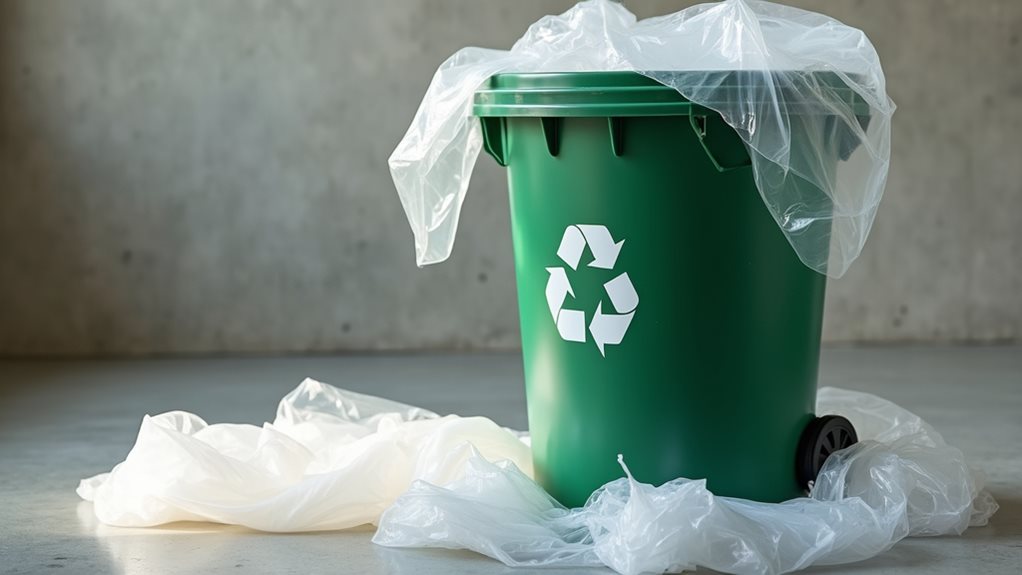

You’ve got several great options for recycling those thin plastic dry cleaning bags! Major retailers like Walmart and Target accept them in collection bins near their entrances, alongside other flexible plastics like bread bags. Your local dry cleaner might take them back for reuse, sometimes offering discounts for returns. Some municipal recycling centers also accept them, though they can’t go in curbside bins since they jam sorting machinery. There’s much more to discover about proper preparation and eco-friendly alternatives.
Understanding Dry Cleaning Bag Materials and Recycling Codes
The mystery of those crinkly, translucent bags draped over your freshly cleaned clothes isn’t really a mystery at all—they’re made from low-density polyethylene, or LDPE for short, which carries the recycling code #4.
I’ll admit, I spent years tossing these dry-cleaning bags straight into the trash without a second thought, assuming they were just destined for landfills.
Here’s what I wish I’d known earlier: that #4 symbol actually means something important for recycling efforts.
Low-density polyethylene is the same material used in grocery bags and food wraps, which explains why these items feel similar when you crumple them in your hands.
Understanding this connection helps you recycle more effectively, since these materials often follow similar disposal guidelines and collection processes.
While these bags contain recyclable plastic, their thin nature means they can jam sorting machinery and aren’t suitable for standard curbside programs.
Retail Store Drop-Off Programs for Plastic Film Recycling
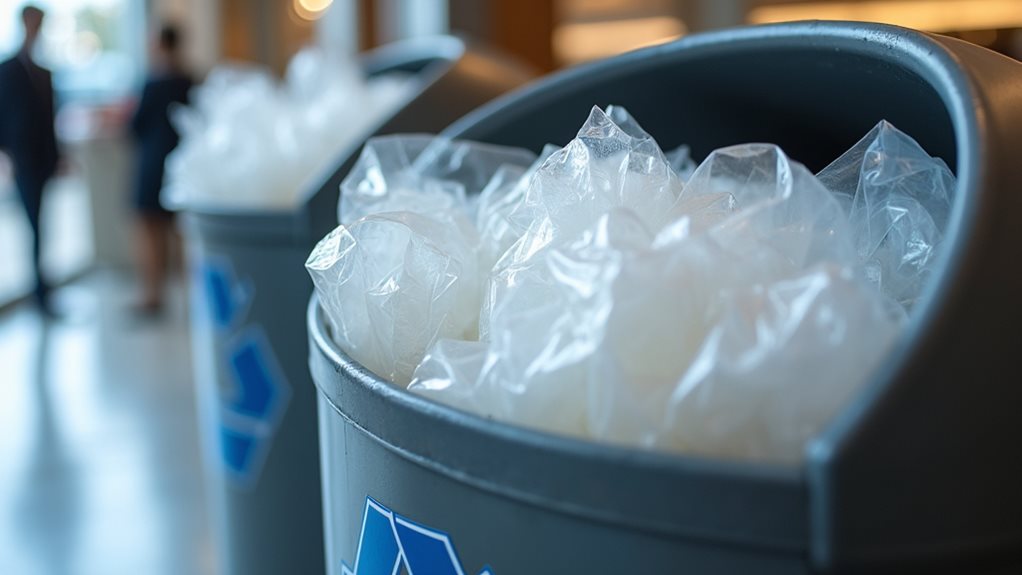
Now that you know what those bags are made of, you’ll be relieved to discover that getting rid of them responsibly is easier than you might think—major retailers like Walmart, Target, and your local grocery stores have become unlikely heroes in the plastic film recycling world.
These store drop-off programs accept your dry cleaning bags alongside other flexible plastics, and honestly, it’s pretty convenient since you’re probably shopping there anyway.
Look for collection bins near store entrances where you can deposit:
- Clean, dry plastic film including dry cleaning bags
- Bread bags and produce bags from grocery trips
- Newspaper sleeves and shipping envelopes
- Bubble wrap and air pillows
- Food storage bags (like Ziploc)
The recycling bin transforms your discarded plastic film into new products like synthetic lumber—pretty amazing, right?
Local Recycling Centers and Municipal Collection Options
Beyond retail drop-offs, you’ll find that many local recycling centers have stepped up their game with curbside programs that actually accept dry cleaning bags, like the ones I’ve seen working beautifully in places like Glendale and San Antonio.
Your municipal options might surprise you too – some cities offer self-help recycling centers where you can drop off film plastics directly, and states like Rhode Island have created extensive regional programs that make recycling these tricky bags almost foolproof.
I’ve learned the hard way that checking with your local waste management department first can save you from those awkward moments of standing at a recycling bin, plastic bag in hand, wondering if you’re about to contaminate an entire batch of recyclables 😅.
Municipal Curbside Collection Programs
While most municipal curbside collection programs won’t accept your dry cleaning bags—trust me, I learned this the hard way after watching my carefully sorted plastics get rejected week after week—there are actually some promising local recycling options if you know where to look.
These lightweight, flexible bags wreak absolute havoc on recycling machinery, jamming equipment faster than you can say “oops.” However, don’t lose hope just yet! Some forward-thinking cities have stepped up their game:
- Glendale, CA accepts film plastics through specialized curbside programs
- San Antonio, TX includes dry cleaning bags in certain collection routes
- Select municipalities offer designated drop-off days for flexible plastics
- Some cities partner with local recycling centers for film plastic collection
- Progressive programs provide clear bags specifically for film plastic materials
Before recycling your dry cleaning bags through any program, make sure to remove any paper receipts or tags that might be attached to prevent contamination.
Your best bet? Call your local recycling coordinator directly.
Self-Help Recycling Centers
Three years ago, when I discovered Madison’s self-help recycling center tucked behind their public works building, I felt like I’d stumbled upon a hidden treasure chest for eco-conscious folks like us.
These self-help recycling centers accept dry cleaning bags alongside other film plastics, giving you a local alternative when curbside programs fall short. You’ll find collection bins specifically designated for film recycling, though you’ll need to remove those pesky hangers and receipts first—trust me, I learned this the hard way! 😅
Each facility operates differently, so I’d recommend calling ahead to confirm they accept dry cleaning bags. Some centers even host community recycling events, making it easier to drop off multiple items during your weekend errands.
Regional Collection Initiatives
Although self-help centers provide excellent options, I’ve discovered that many communities have expanded their recycling game through regional collection initiatives that make dropping off dry cleaning bags even more convenient than my beloved Madison center.
These programs recognize that film plastic recycling shouldn’t require detective work, and they’ve created accessible solutions that’ll make you wonder why everywhere doesn’t offer these options:
- Curbside collection programs in cities like Glendale, CA, where you simply toss dry cleaning bags into designated bins
- Municipal drop-off locations that accept all film plastics without sorting headaches
- Regional partnerships between local recycling centers offering expanded collection hours
- Store drop-off recyclable programs at major retailers with convenient parking and clear signage
- Collaborative initiatives between neighboring communities sharing resources and pickup schedules
Many of these same major retailers that stock dry cleaning sheets also serve as convenient drop-off points for recycling the plastic bags that come with traditional dry cleaning services.
Working With Your Dry Cleaner for Bag Reuse and Collection
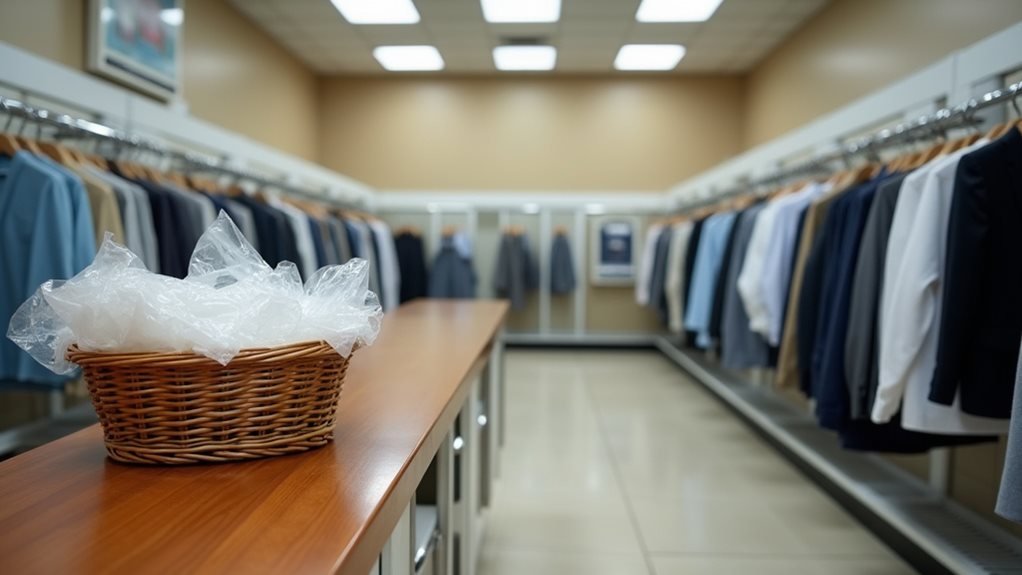
Since most curbside recycling programs won’t touch those flimsy plastic dry cleaning bags, your local dry cleaner becomes your best ally in keeping them out of landfills.
I learned this after stuffing countless bags into my kitchen drawer, feeling guilty every time I tossed another one.
Here’s the beautiful truth: many dry cleaners actually want their bags back, partnering with companies that specialize in flexible plastic recycling.
Many dry cleaners eagerly accept their bags back through partnerships with specialized flexible plastic recycling companies.
When you ask about bag recycling, you’ll often discover they’ll gladly accept them for reuse in their operations. Some even offer discounts for returning customers – talk about a win-win!
Just remember to remove hangers, receipts, and any other contaminants before dropping them off, making the recycling process easier for everyone involved.
If your dry cleaner doesn’t offer a take-back program, you can bring them to plastic film recycling programs at many grocery stores and retailers instead.
Proper Preparation Guidelines for Recycling Dry Cleaning Bags
While getting your dry cleaning bags ready for recycling might seem straightforward, I’ve learned through trial and error that proper preparation makes all the difference between successful recycling and frustrated collection workers.
Before heading to your store drop-off location, you’ll want to guarantee your dry cleaning bags meet recycling standards:
- Remove all hangers, receipts, and tags completely
- Check for the How2Recycle label or #4 plastic symbol
- Bundle clean bags together in one larger plastic bag
- Verify bags are completely dry and odor-free
- Keep different plastic types separated from each other
I once sheepishly watched a worker reject my entire bundle because I’d left stapled receipts attached 😅.
Trust me, taking these extra minutes at home saves everyone time and guarantees your dry cleaning bags actually get recycled properly.
Alternative Solutions to Reduce Dry Cleaning Bag Waste
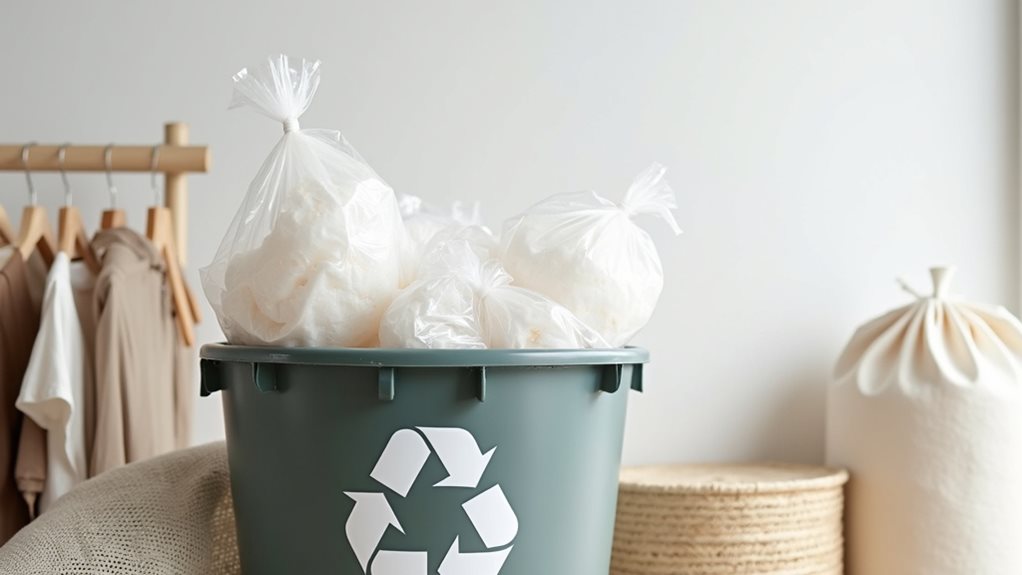
You don’t have to accept every plastic bag that comes your way, and honestly, I’ve learned that saying “no thanks” to my dry cleaner’s automatic bagging has become second nature after years of watching those flimsy sheets pile up in my closet like unwanted party guests. 🙄
Instead of relying solely on recycling programs, you can tackle this waste problem head-on by investing in reusable garment bags, seeking out environmentally conscious cleaners who’ve already made the switch to sustainable practices, or exploring simple home care methods that’ll keep your clothes fresh without any plastic involved.
These alternatives don’t just reduce waste, they often save you money and give you more control over how your favorite garments are treated. Plus, skipping those plastic dry cleaning bags altogether helps you avoid the mold and mildew problems that can develop when clothes are stored long-term in non-breathable plastic packaging.
Reusable Garment Bags
Although I used to sheepishly accept every plastic bag my dry cleaner handed me, thinking I might find some creative use for them later (spoiler alert: I never did 😅), I’ve discovered that reusable garment bags offer a surprisingly simple solution to this wasteful habit.
Companies like The Green Garmento create durable alternatives from sustainable materials, and many dry cleaners now actively promote these eco-friendly options.
When you switch to reusable bags, you’re preventing hundreds of millions of pounds of LDPE waste from reaching landfills annually, while building a culture of sustainability in your community.
Picture the environmental impact:
- Your single reusable bag replacing hundreds of plastic ones yearly
- Cleaner air from reduced manufacturing emissions
- Less petroleum consumption for plastic production
- Healthier ecosystems free from disposable bag pollution
- Future generations inheriting greener recycling practices
Just like with hangers, many dry cleaners will gladly accept returned bags for reuse, creating another simple way to reduce waste in your garment care routine.
Choose Eco-Friendly Cleaners
Where can you find dry cleaners who genuinely care about our planet’s future, and how do you identify the ones making meaningful environmental commitments in addition to simple marketing buzzwords?
Start by asking potential cleaners about their eco-friendly practices—the passionate ones will light up when discussing their solvent-free processes and reusable garment bags.
I’ve discovered that truly green cleaners often display their environmental certifications prominently and enthusiastically explain their recycling program details.
Look for establishments using non-toxic cleaning methods, which naturally reduce plastic packaging waste since they don’t require the same protective wrapping.
The best eco-conscious cleaners I’ve found actually invite customers to participate in their sustainability efforts, offering incentives for returning hangers and bags.
These businesses view environmental responsibility as a partnership, rather than merely a marketing angle. 😊
Many progressive dry cleaners are now adopting wet cleaning processes that use biodegradable detergents instead of harmful chemical solvents, significantly reducing their environmental impact.
Home Care Alternatives
While finding the perfect eco-friendly cleaner represents a wonderful long-term solution, I’ve learned that some of my most effective waste-reduction wins have actually happened right in my own closet and laundry room.
You’d be amazed how many “dry clean only” items actually respond beautifully to gentle home care alternatives.
Here’s what’s worked magic for me:
- Hand washing delicate blouses in cool water with mild detergent
- Using a handheld steamer to refresh wool sweaters and remove wrinkles
- Spot-treating stains immediately instead of waiting for professional cleaning
- Air-drying everything on padded hangers to maintain shape
- Investing in reusable bags for the occasional professional cleaning trip
These eco-friendly practices haven’t just helped me recycle fewer bags—they’ve actually extended my clothes’ lifespan while saving money! 💰
For those who do require professional dry cleaning for specialized uniforms or work-specific attire, maintaining detailed records of cleaning expenses may help with tax deductions as legitimate business expenses.