
You’ll need dry cleaning when you spot that circle symbol on care labels, or when you’re handling delicate fabrics like silk, wool, and leather that can’t survive regular washing. I’ve learned the hard way that dress shirts need professional care after every wear or two, while suits can go three to four wears before requiring attention. Close-contact garments absorb body oils quickly, and trust me, those stubborn stains embed deep into fibers where home washing simply can’t reach them effectively, making professional solvents your best bet for maintaining fabric integrity and extending garment life—and there’s so much more strategy behind timing these decisions perfectly.
Understanding Fabric Types That Require Professional Care
When I first started building my professional wardrobe, I made the rookie mistake of tossing my brand-new silk blouse into the washing machine with my regular laundry, thinking I could save a few bucks on dry cleaning costs.
That expensive silk blouse disaster taught me why some clothing investments require professional care—no shortcuts allowed.
That expensive lesson taught me to always check the care label before attempting dry cleaning at home alternatives. Certain fabrics like silk, wool, and leather simply can’t handle water and detergent—they’ll shrink, lose their luxurious texture, or become completely ruined.
Professional dry cleaning uses specialized solvents that protect delicate fibers while removing stains and odors effectively.
Structured garments, vintage pieces with intricate details, and fabrics like suede or velvet also need professional dry cleaning to maintain their original beauty and integrity. Additionally, garments with beading, sequins, or other decorative elements require the gentle chemical solvents used in dry cleaning to prevent damage that standard washing could cause.
Decoding Care Labels and Garment Structure
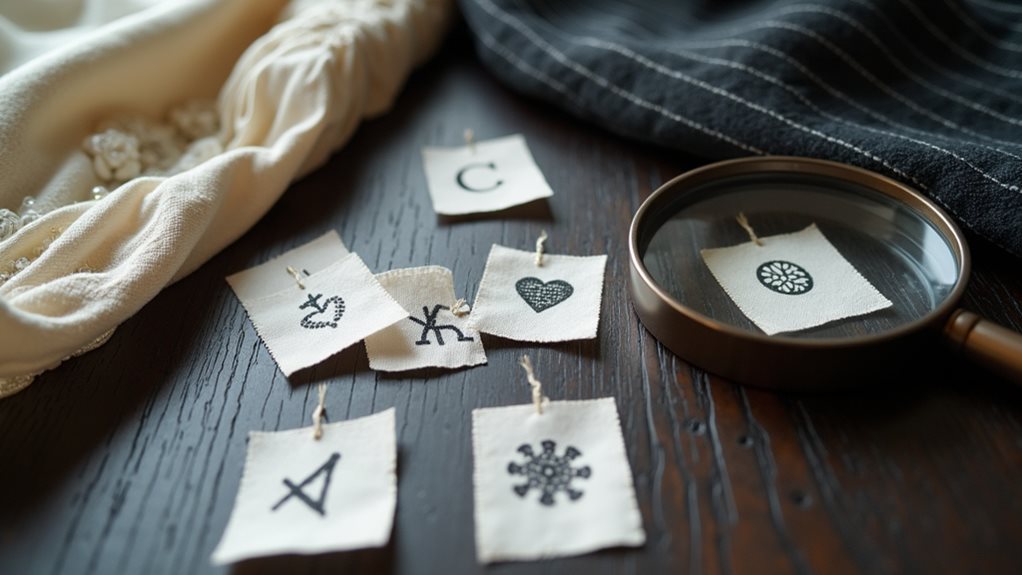
You’ll want to become a detective when examining care labels, because those tiny symbols and “dry clean only” warnings aren’t just suggestions—they’re your garment’s survival guide that can save you from expensive mistakes.
I learned this the hard way when I ignored the care label on my favorite wool blazer and ended up with something that would’ve fit my nephew better than me 😅.
Take time to analyze both the fabric construction and structural elements like shoulder pads, interfacing, or delicate embellishments, since these details will tell you whether your garment can handle the tumble of home washing or needs the gentle touch of professional care.
Professional dry cleaning is particularly crucial for oil-based stains that regular washing simply cannot effectively remove from your garments.
Reading Care Symbols
How many times have you stared at those cryptic little symbols on your garment’s care label, feeling like you’re trying to decode ancient hieroglyphics?
I’ve been there, squinting at tiny circles and wavy lines like some sort of laundry detective 🕵️♀️. Those care instructions aren’t just manufacturer suggestions—they’re your garment’s survival guide.
When you spot that circle symbol, it’s screaming “dry clean only,” and ignoring it could turn your favorite blazer into doll clothes. Triangle symbols mean bleach is okay, while that little tub icon suggests hand wash is your safest bet.
Letters like P, F, or W inside the circle specify which cleaning solvents your dry cleaner should use, while bars underneath indicate the need for gentler treatment.
Before attempting any DIY cleaning adventures, always test first on an inconspicuous area, because learning these symbols the hard way usually involves tears and ruined clothes.
Fabric Construction Analysis
Since fabric construction tells the real story behind those care labels, I’ve learned to play detective with my clothes, examining not just what the tag says but why it says it.
When you’re holding that gorgeous silk blouse, you’ll notice the delicate weave practically whispers “handle with care” – those intricate fibers can’t survive your washing machine’s aggressive spin cycle.
I’ve discovered that structured blazers with their internal interfacing need to be dry cleaned because water would turn them into shapeless disasters, while simple cotton tees can often be hand washed despite cautious care labels.
Understanding your fabric’s construction helps you make smarter decisions about whether that expensive dry cleaning bill is truly necessary or just manufacturer overcaution.
Delicate fabrics like wool and cashmere maintain their texture and longevity better with chemical solvents rather than water-based cleaning methods.
Delicate Materials That Benefit From Dry Cleaning
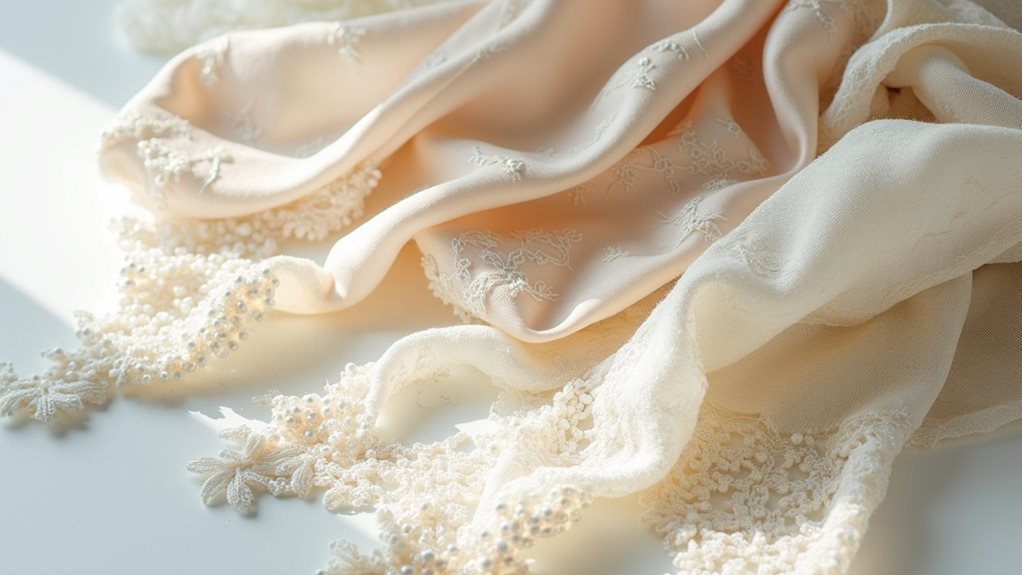
When I first discovered that my favorite silk blouse had turned into a wrinkled, water-stained mess after a well-intentioned home wash, I learned the hard way that certain fabrics deserve royal treatment.
Delicate materials like silk, wool, and suede absolutely need dry cleaning to preserve their integrity, and trust me, skipping this specialized care isn’t worth the heartache 😅.
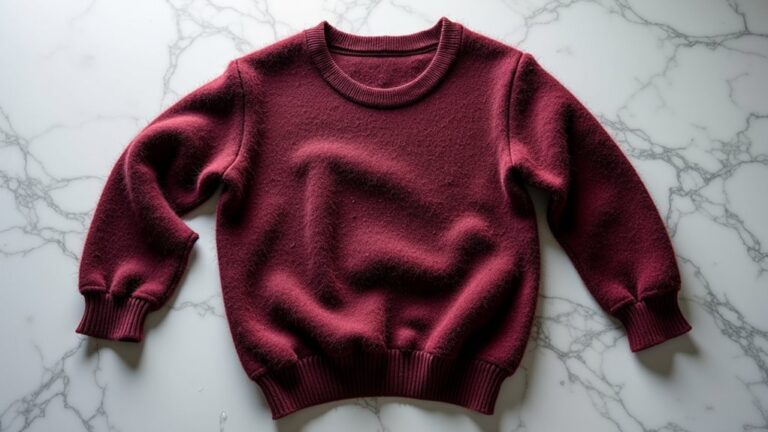
Your merino wool sweaters will thank you for avoiding shrinkage nightmares, while velvet pieces maintain their luxurious plush texture when professionally cleaned.
I’ve also learned that vintage garments and anything with intricate beading or embellishments should go straight to the dry cleaner – water can destroy decades of craftsmanship in one wash cycle.
Dry cleaning uses chemical solvents instead of water to safely remove dirt and stains while preserving the fabric’s structure and appearance.
Frequency Guidelines for Different Clothing Categories
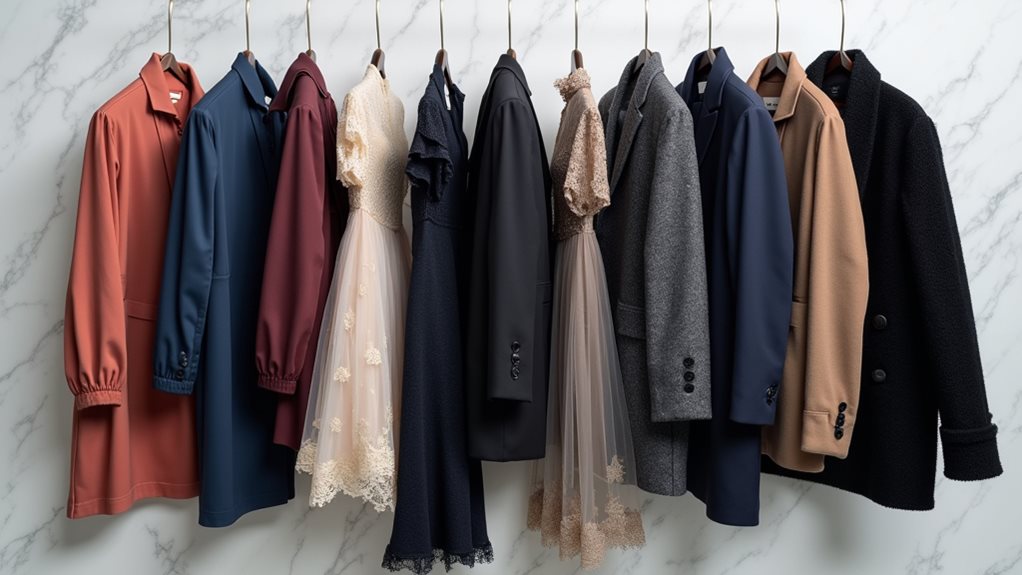
After years of trial and error with my own wardrobe disasters, I’ve developed a practical system for determining how often different pieces need professional attention, because honestly, overwashing delicate items can be just as damaging as neglecting them entirely.
Here’s my foolproof frequency guide that’ll save your clothes (and wallet):
- Dress shirts and blouses – Every wear or two maximum, since these workhorses absorb everything.
- Suits and formal wear – Every three to four wears, unless you’ve had an exceptionally sweaty day.
- Outerwear – Once per season, or immediately when that musty smell creeps in.
- Vintage pieces – Every single wear, no exceptions (trust me on this one).
- Slacks – The frequency depends on fabric type, with wool blends lasting 3-5 wears and synthetic blends extending to 5-7 wears before requiring professional cleaning.
Your dry cleaners will appreciate consistent business, and you’ll always have impeccably clean clothes without the guesswork of whether to hand wash.
Garments Worn Close to the Body
When you’re wearing shirts, blouses, and other garments that hug your skin closely, you’re fundamentally creating a perfect storm for sweat absorption and stubborn stains that’ll have you wondering why that expensive silk top suddenly smells like yesterday’s gym session 😅.
I learned this the hard way after ruining my favorite cotton dress shirt by thinking I could stretch it to three wears without cleaning—trust me, your body oils don’t take breaks, and they’re surprisingly persistent little troublemakers.
You’ll want to establish a smart cleaning routine that accounts for how these close-contact pieces absorb everything your skin produces, because understanding this absorption pattern is the key to keeping your wardrobe fresh and extending the life of your favorite pieces.
For delicate fabrics like silk or wool that come into contact with your skin, dry cleaning uses chemical solvents instead of water to effectively remove body oils and perspiration without damaging the sensitive material.
Sweat and Stain Absorption
Since I learned the hard way that my favorite silk blouse wasn’t as forgiving as I’d hoped, I’ve become a firm believer in understanding which garments need extra attention after absorbing our daily wear and tear.
Your shirts and blouses face a constant battle against sweat and oils that seep deep into fabric fibers, creating stubborn stains that hand washing simply can’t tackle.
When you skip proper care, you’re fundamentally watching your investment deteriorate with each wear.
Here’s what happens when you don’t dry clean these pieces regularly:
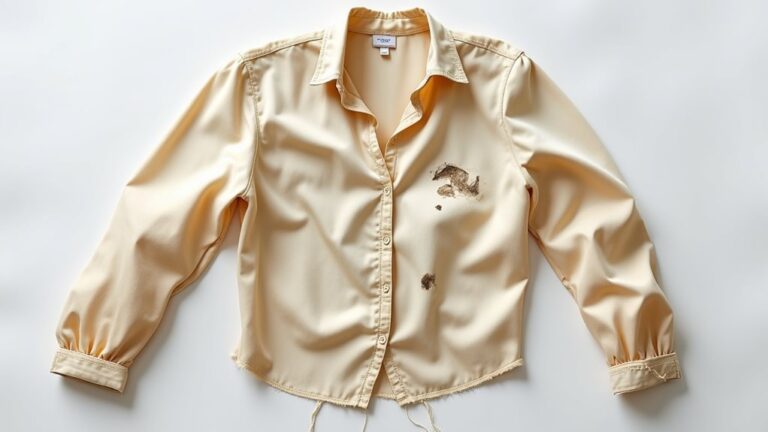
- Sweat stains become permanent yellow marks that mock your laundry efforts
- Odors embed so deeply that even multiple washes can’t eliminate them
- Fabric integrity weakens, causing premature aging and deterioration
- Professional appearance suffers, undermining your confidence and credibility
While dry cleaning uses chemical solvents rather than water, making it less effective against water-soluble sweat components, professional cleaners may offer specialized pre-treatments that can lighten stubborn perspiration stains.
Trust me—preventive dry cleaning beats replacing ruined garments every time!
Cleaning Frequency Guidelines
While I used to think daily dry cleaning was excessive and expensive, discovering the ideal frequency for different garments has saved me countless dollars and embarrassing moments over the years.
You’ll want to dry clean shirts and blouses after every wear since they absorb sweat directly against your skin, preventing those yellowish stains that become permanent nightmares.
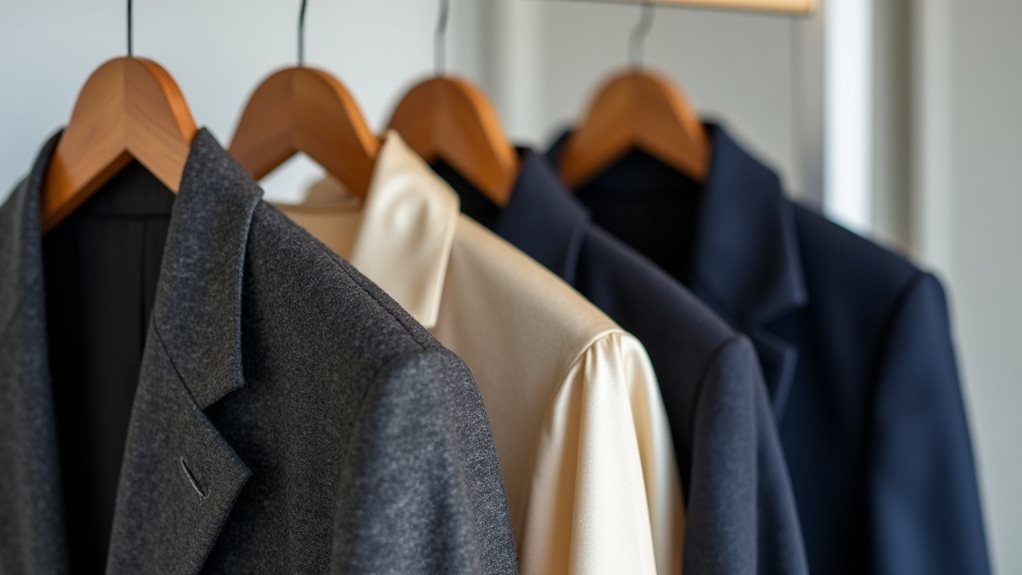
For blazers and jackets, every three to four wears works perfectly fine since they’re not soaking up your body’s moisture.
Delicate items like silk require special attention—I learned this the hard way when my favorite blouse turned into an expensive rag 😅.
Quality suits made from wool can typically be worn 4-6 times before requiring professional cleaning thanks to wool’s natural odor-resistant properties.
Establishing proper cleaning frequency means your treated stains disappear completely, and your wardrobe maintains that crisp, professional appearance that commands respect.
Seasonal and Formal Wear Considerations

As someone who’s learned the hard way after showing up to a wedding with a mysteriously wrinkled suit that smelled faintly of last winter’s moth balls 😅, I can tell you that seasonal and formal wear demands a completely different dry cleaning strategy than your everyday wardrobe.
Your delicate formal wear, especially silk and wool pieces, needs professional attention after just one or two wears since these fabrics show every imperfection.
Meanwhile, seasonal outerwear requires at least one thorough dry clean per season, though you’ll want mid-season treatment if musty odors develop.
Here’s my hard-earned wisdom for protecting your investment pieces:
- Never store formal wear without having treated stains first
- Schedule seasonal cleaning before storage
- Address odors immediately
- Keep wear counts for expensive pieces
The chemical solvents used in dry cleaning are particularly effective at removing stubborn stains from formal fabrics that water-based washing simply cannot handle without causing damage.