
Yes, dry cleaning can effectively eliminate mold from your clothes through its powerful combination of high-temperature treatment (60-63°C) and specialized solvents like perchloroethylene that dissolve the oils mold feeds on. You’ll have the best success with cotton and wool fabrics when you catch the mold early, though delicate materials like silk require experienced professionals. While severe infestations might need additional treatment, proper dry cleaning destroys most mold spores and prevents further spread, especially when you understand the complete process.
Understanding How Dry Cleaning Works Against Mold Spores
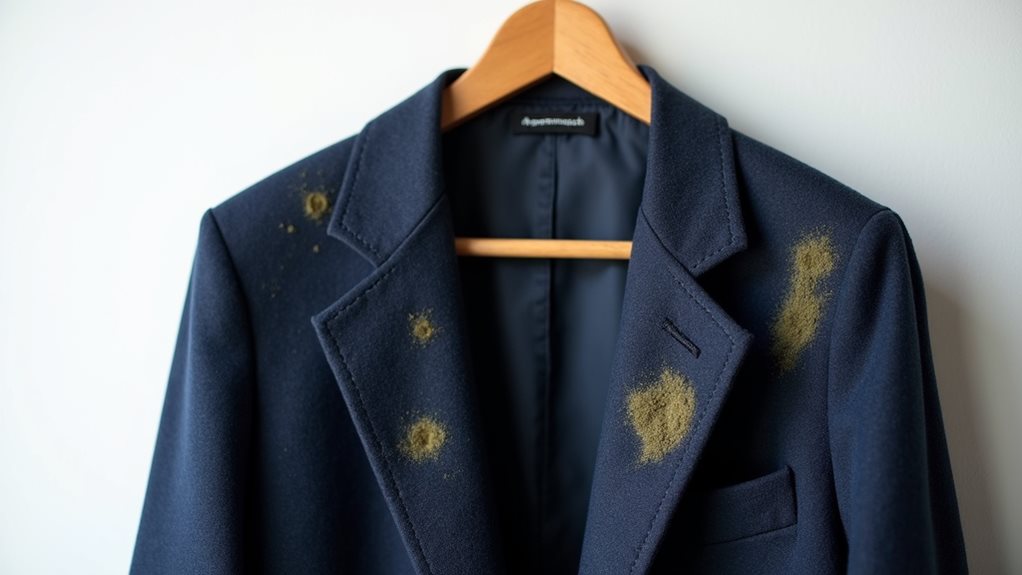
When you’re staring at that favorite blazer with suspicious dark spots creeping across the fabric, you might wonder if your trusty dry cleaner can work their usual magic against mold spores.
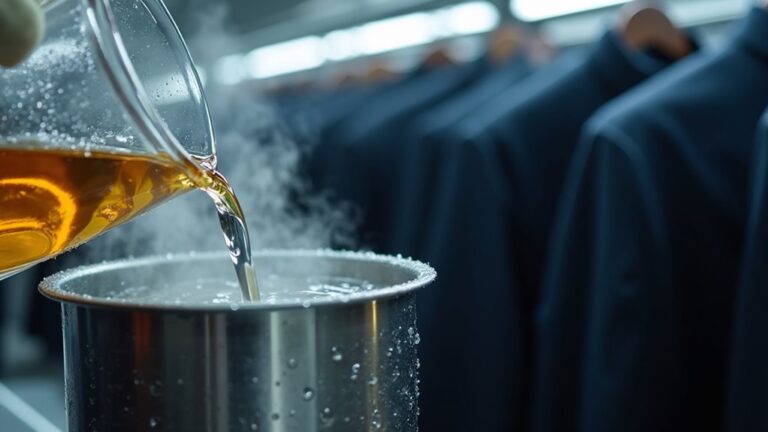
Here’s the encouraging news: dry cleaning can actually kill many types of mold through a powerful one-two punch that I’ve witnessed firsthand. The cleaning process combines perchloroethylene solvents, which dissolve the oils and grease that mold loves to feast on, with temperatures reaching 60-63°C that literally cook those stubborn spores.
Dry cleaning delivers a lethal combination of powerful solvents and high heat that effectively destroys most mold spores on contact.
Your professional dry cleaner might also apply specialized stain remover during pre-treatment, helping break down evidence of mold before the main event.
While getting items dry cleaned won’t remove mould in every scenario, it’s surprisingly effective for many situations. The success rate depends heavily on factors like the fabric type, how extensively the mold has spread, and how long the contamination has been developing on your garment.
Types of Fabrics and Mold Severity That Respond to Dry Cleaning
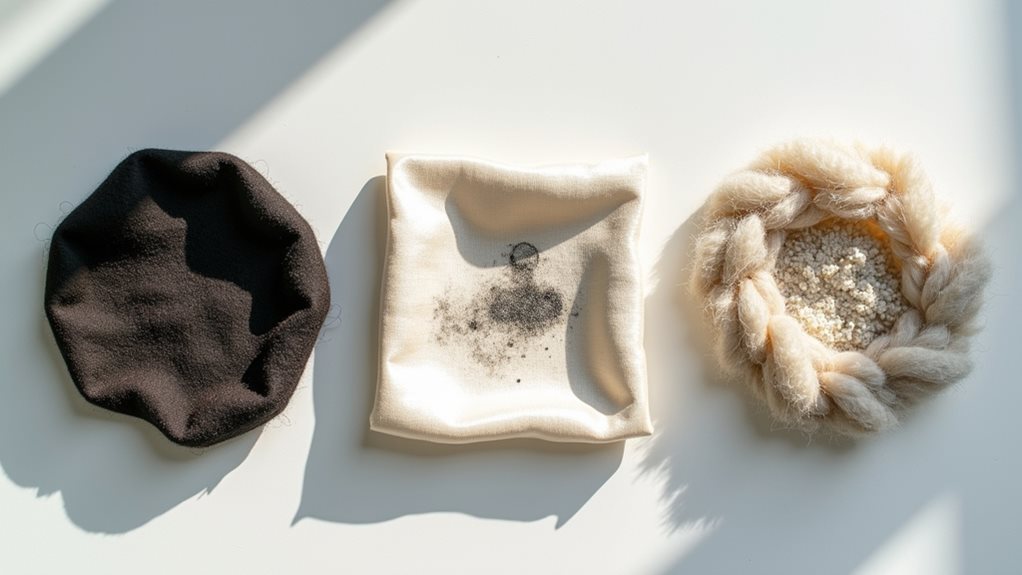
Success with dry cleaning mold really depends on what you’re working with, and I’ve learned this lesson through some expensive mistakes over the years.
Cotton and wool fabrics respond beautifully to dry cleaning when you catch mold infestation early, while delicate fabrics like silk need experienced dry cleaners who understand their vulnerability.
I once waited too long on a vintage wool coat, and the severe mold had penetrated so deeply that even professional cleaning couldn’t save it 😔.
The key is acting fast – light to moderate infestations clean up wonderfully, but severe mold is stubborn.
For valuable garments, trust professional dry cleaners who can assess fabric type and mold severity, because the high-temperature cleaning process works miracles when timing’s right.
The chemical solvents used in dry cleaning can kill some mold spores, though deeply embedded mold in porous materials typically requires more intensive treatment methods.

Fast and Effective: ACTIVE Seal & Grout Stain Remover is a Powerful Whitening Deep Cleaner. Mildew Stain Remover has an Instant Effect in Minutes to Quickly Clean Mold Stain and Eliminate Unwanted Musty Dirt and Grime
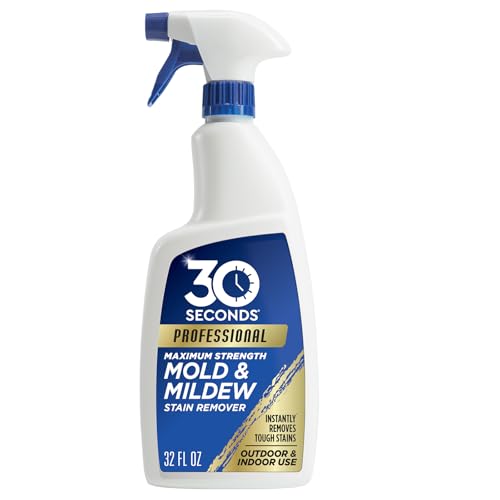
BRIGHTER RESULTS INSTANTLY: Noticeably brightens indoor and outdoor surfaces, removing black mold and mildew stains as you watch, with no scrubbing or pressure washing required for fast, visible results

What You'll Get: One 32oz spray bottles of Scrubbing Bubbles Foaming Bleach Bathroom Cleaner. Bottle Made from 30% recycled content (excluding dye, trigger, and label)
The Role of Heat and Solvents in Mold Elimination
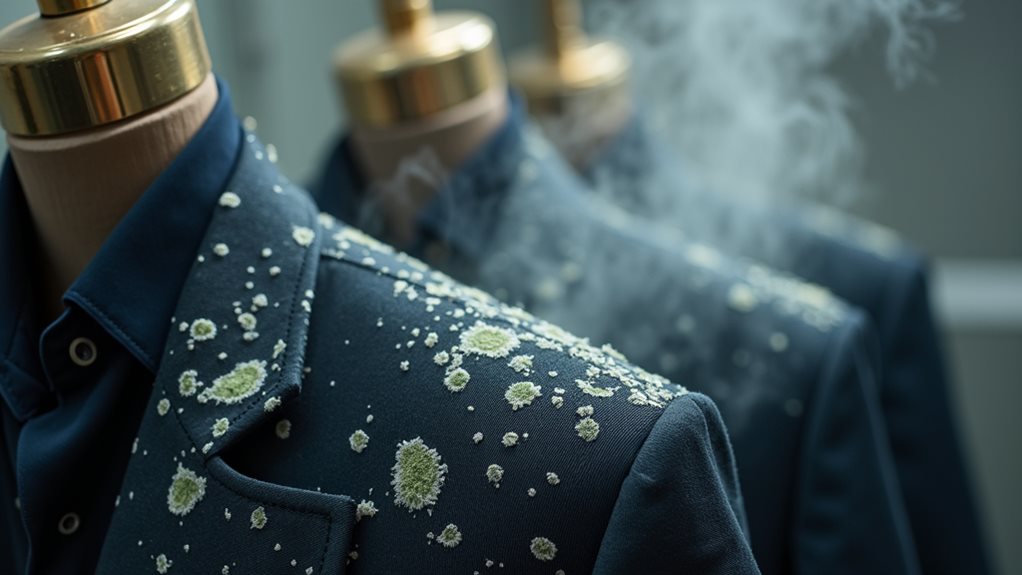
Although I’ve always been fascinated by the science behind cleaning, understanding how heat and solvents work together to eliminate mold completely changed my perspective on what dry cleaning can actually accomplish.
When professional dry cleaners expose your fabrics to temperatures reaching 60-63°C, they’re fundamentally creating a hostile environment where many mold spores simply can’t survive – it’s like a molecular-level eviction notice! 😊
The real magic happens when powerful solvents like perchloroethylene join the cleaning process, dissolving those stubborn oils and greases where mold loves to hide.
I’ve learned that this dual-action approach makes dry cleaning surprisingly effective for mold removal, though the success rate depends heavily on your fabric type and how deeply the mold has established itself.
However, severely contaminated items might require professional mold remediation services before dry cleaning to ensure complete elimination of extensive mold damage.
Pre-Treatment Methods for Heavy Mold Infestations
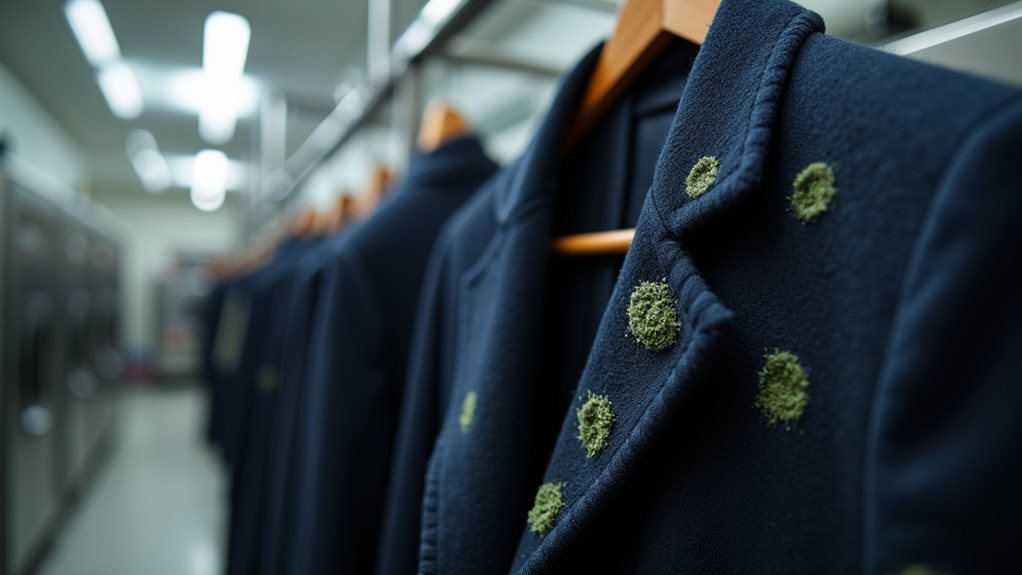
Before you send your mold-damaged items straight to the dry cleaner, there’s something I wish I’d known during my first encounter with a musty vintage blazer – the significance of proper pre-treatment for heavy infestations.
Professional cleaners don’t just toss moldy garments into their machines; they inspect fabrics carefully, applying specialized solutions that break down mold proteins before the actual cleaning begins.
Professional dry cleaners perform detailed fabric inspections and apply mold protein-breaking solutions before beginning the actual cleaning process.
These pre-treatment methods involve targeted stain removers that dissolve deeply embedded spores, preventing them from spreading during processing.
However, I’ve learned that severe mold cases require realistic expectations – complete removal isn’t always guaranteed, and some items might need multiple treatments or, heartbreakingly, disposal.
Professional assessment becomes essential for determining whether thorough cleaning is achievable.
While dry cleaning solvents can effectively treat mold, it’s worth noting that traditional chemicals like perchloroethylene may pose health risks with prolonged exposure, making proper ventilation of treated garments important.

MOLD ARMOR Mold Blocker is waterproof and prevents mold growth for up to 3 months.
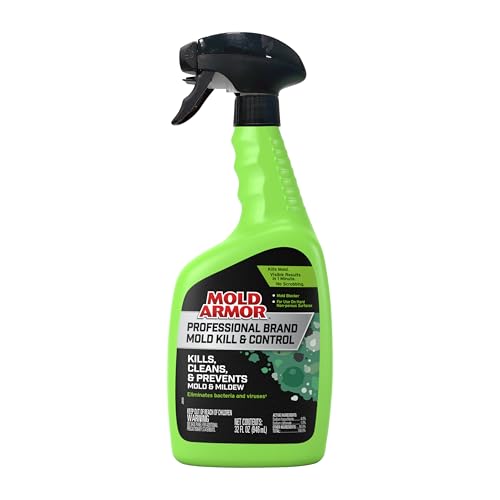
KILLS, CLEANS & PREVENTS MOLD AND MILDEW: Kill and clean up mold and mildew on your hard, non-porous surfaces with MOLD ARMOR Professional Brand Mold Kill & Control.

CREATES AN INVISIBLE SHIELD ON TREATED SURFACES that inhibits the growth of microorganisms and helps prevent the growth and spread of bacteria for up to 3 months, antimicrobial fabric spray for long-lasting surface safety.
Preventing Future Mold Growth After Professional Cleaning
Once your professionally cleaned garments return home looking fresh and mold-free, the real challenge begins – keeping them that way, which I learned the hard way after my “victory” over that vintage blazer turned into a recurring nightmare six months later.
Preventing mould requires creating storage spaces that breathe, because trapped moisture is mold’s best friend. You’ll want to properly dry everything completely before storing, allowing air to circulate freely through closets and wardrobes.
Moisture absorbers like silica gel packets become your secret weapons against humidity, while regularly checking for visible mold helps catch problems early.
Just as dry cleaning uses high heat exposure to eliminate other fabric pests and contaminants, maintaining proper temperature and humidity control in your storage areas creates an environment where mold simply cannot thrive.
Trust me, maintaining good air quality in storage areas isn’t glamorous work, but it’s infinitely better than repeatedly paying to remove mould from the same clothes!

Excellent Moisture Absorption: Our silica gel packets has transparent silica gel beads inside, decassant packs has high moisture absorption, which can effectively absorb the humidity in the air, keep the items in a dry state, and prevent the moisture from damaging the items

FAMILY-FRIENDLY MOISTURE CONTROL: Keep your snacks crispy and medications potent by keeping ambient moisture at bay; Crafted with premium, odorless silica gel and non-toxic fabric, Vbeijll Desiccants offer gentle yet effective protection for your home [Note: Packs ≤ 5g feature food safe wrapping for direct contact with food & medicine; Packs > 5g are recommended for placement alongside items rather than direct mixing, without affecting absorption]
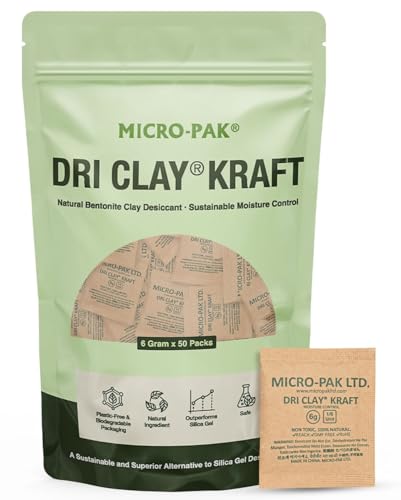
SUSTAINABLE CLAY DESICCANT FOR STORAGE: Plastic-free moisture absorbers made from natural bentonite-clay; responsibly packaged in biodegradable Kraft paper; Dri Clay is Halal Certified and best alternative to silica gel packets for storage needs.