
While you might think dry cleaning is a modern convenience, waterless cleaning methods actually stretch back thousands of years to ancient Rome, where fullers used clay and absorbent substances to tackle stubborn stains. However, modern dry cleaning as you know it began in 1845 when Jean Baptiste Jolly accidentally spilled kerosene on a tablecloth and discovered its remarkable cleaning power, opening the first commercial dry cleaning shop in Paris and revolutionizing garment care forever—though there’s much more to this fascinating evolution.
The Ancient Origins of Waterless Cleaning Methods
While most of us think dry cleaning is a modern convenience that emerged with our busy lifestyles, the truth is that people have been using waterless cleaning methods for thousands of years, and honestly, they were probably more resourceful than we give them credit for.
In Ancient Rome, fullers were the unsung heroes who mastered clay and absorbent substances to tackle stubborn stains, setting up specialized cleaning services that’d make today’s entrepreneurs jealous.
Ancient Greece wasn’t far behind, experimenting with powdered chemicals that’d make your head spin.
The evolution continued as French innovators introduced turpentine-based solvents by the 1700s, proving that necessity truly is the mother of invention when it comes to keeping our clothes fresh.
However, the true birth of modern dry cleaning came in the mid-19th century when Jean Baptiste Jolly established the first commercial dry cleaning business in Paris around 1855.
The Birth of Modern Dry Cleaning in the 19th Century
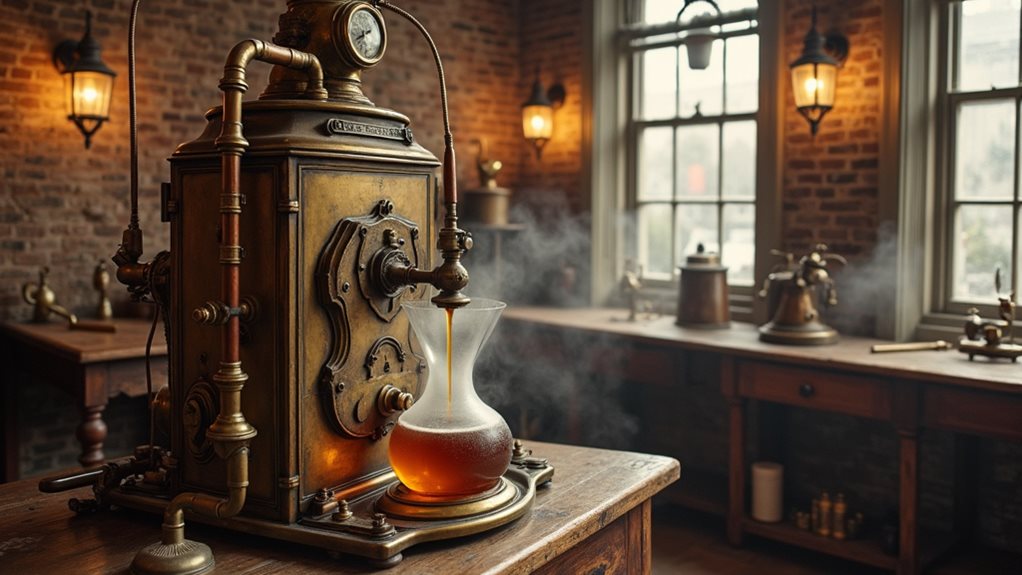
Although those ancient cleaning methods were ingenious for their time, the real game-changer arrived when a French dye-works owner named Jean Baptiste Jolly made one of those happy accidents that changed everything in the early 1800s.
Imagine this: kerosene accidentally spilled on a tablecloth, and instead of ruining it, the stain magically disappeared! 🎩 Jolly’s discovery launched the modern dry cleaning process, leading him to open Teinturerie Jolly Belin in Paris by 1845.
Meanwhile, Thomas L. Jennings was developing his own dry scouring technique in America, becoming the first African American patent holder in 1821.
These petroleum-based solvents worked brilliantly, though their flammability kept everyone on edge until safer alternatives like perchloroethylene emerged, transforming those early experiments into today’s modern dry cleaning machines.
The introduction of synthetic solvents like perchloroethylene in the 1930s revolutionized the industry by providing a non-flammable alternative that became the standard for decades.
Revolutionary Solvent Developments of the Early 1900s
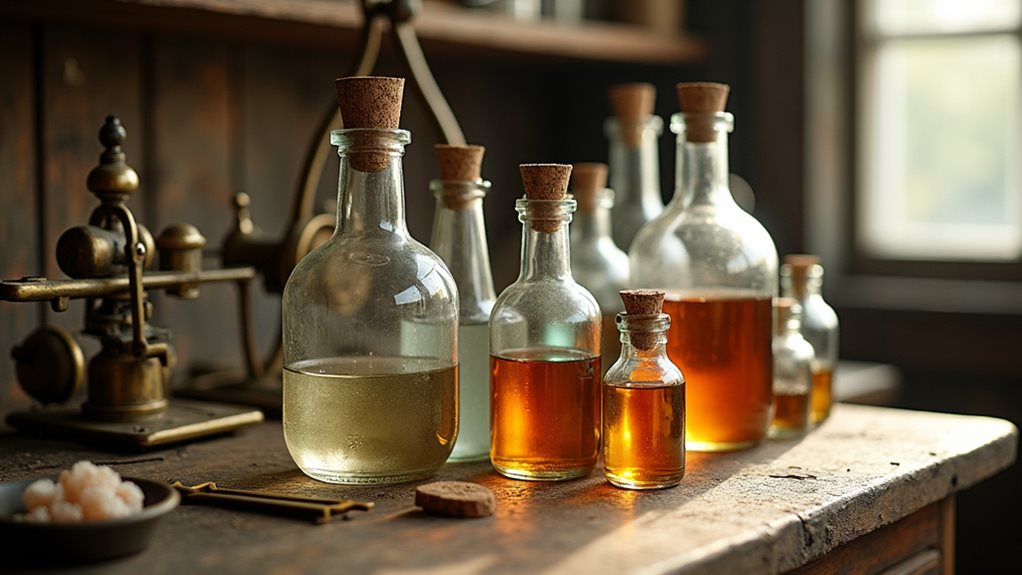
As the 20th century dawned, dry cleaning pioneers found themselves wrestling with a dangerous paradox—their petroleum-based solvents worked brilliantly but turned every cleaning shop into a potential fireball. 🔥
Imagine this: you’re running a business where one spark could literally blow up your livelihood, and that’s exactly what motivated chemists to develop chlorinated solvents that wouldn’t ignite at the drop of a match.
Carbon tetrachloride and trichloroethylene became early heroes, offering the cleaning power operators desperately needed without the fire risk.
Then perchloroethylene arrived in the 1930s like a game-changer, providing nonflammable safety that revolutionized the dry cleaning industry.
This chlorinated hydrocarbon became the industry standard because it could dissolve oils and grease while evaporating completely without leaving any residues on delicate fabrics.
Sure, environmental concerns emerged later, pushing innovation toward closed-loop systems and solvent recovery methods, but these early solvents transformed a risky trade into a reliable business.

Professional Grade Formula: Specifically designed as a dry-cleaning solvent to safely remove oil-based stains, grease, and grime without using water.
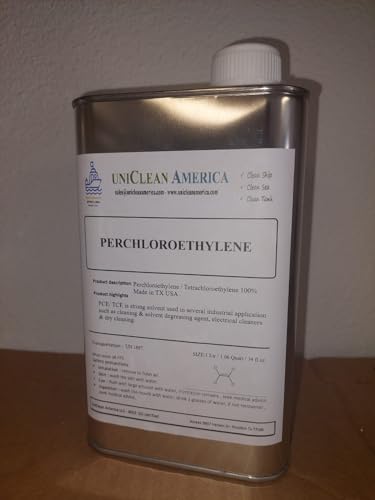
Perchloroethylene - Tetrachloroethylene - ( PCE ) - Powerful Solvent for Cleaning Applications - Made in USA

ACS Grade: Meets American Chemical Society standards for high-purity laboratory research, analytical testing, and precision chemical synthesis.
The Rise of Perchloroethylene and Industry Standardization
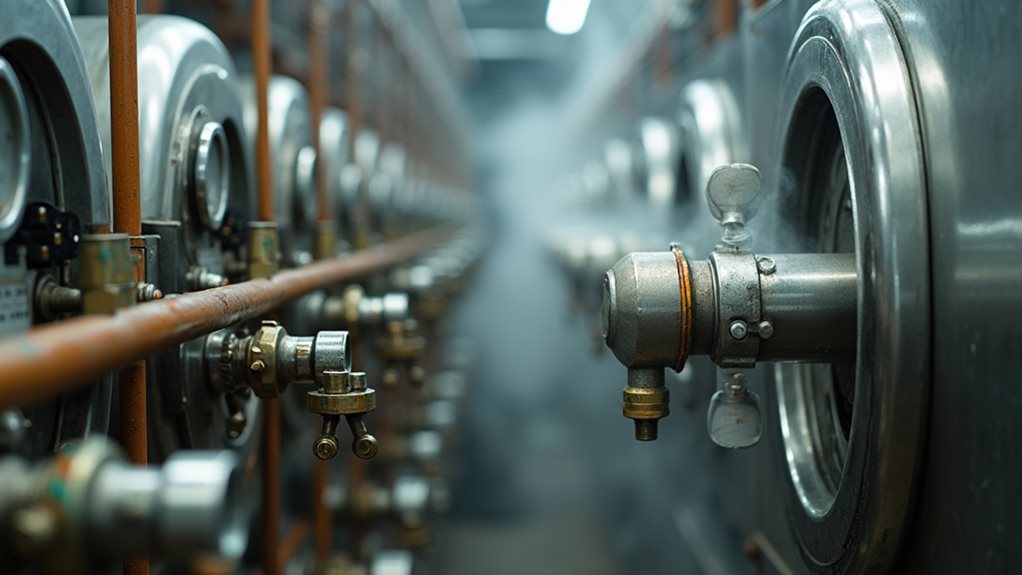
When perchloroethylene burst onto the scene in the mid-1930s, it didn’t just solve the dry cleaning industry’s safety problems—it created the foundation for modern professional garment care that we still rely on today. 💫
Envision this transformation: shop owners who’d been nervously eyeing their fire extinguishers could finally breathe easy, knowing their new wonder solvent wouldn’t turn a simple spark into a catastrophe, and honestly, that peace of mind changed everything about how the business operated.
You’d find industry professionals ditching petroleum-based solvents faster than yesterday’s newspaper, drawn to perchloroethylene’s superior cleaning power and stain removal capabilities. Its nonflammable nature became the gold standard, establishing true industry standardization.
Though health concerns and environmental impacts have sparked exploration of alternative solvents, PCE’s dominance endures remarkably. This shift away from petroleum alternatives like Stoddard solvent and petroleum spirits occurred despite their established effectiveness in dissolving oils and greases.
perchloroethylene - HIGH Purity - Has several industrial and cleaning applications and in dry cleaning solvent

ACS Grade Purity: High-purity Perchloroethylene meets American Chemical Society standards for laboratory analysis and critical research applications.
perchloroethylene - HIGH Purity - Has several industrial and cleaning applications and in dry cleaning solvent
Contemporary Innovations and Environmental Alternatives
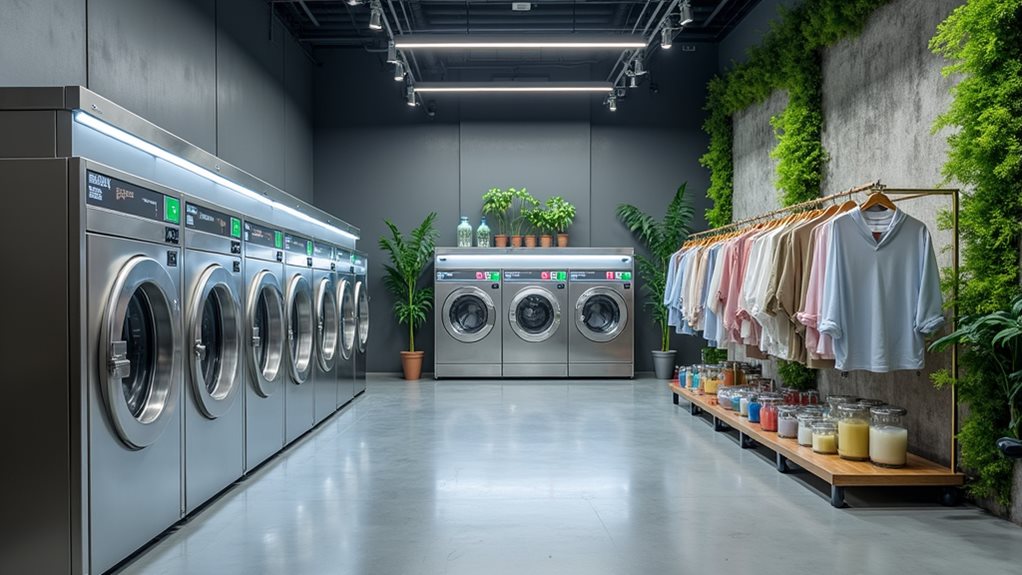
While perchloroethylene dominated the industry for decades, today’s dry cleaning environment tells a completely different story, one where environmental consciousness drives innovation and shapes every business decision you’ll encounter at your local cleaner. 🌱
Picture walking into a modern dry cleaning facility where the air doesn’t carry that distinctive chemical smell you might remember from childhood visits, because forward-thinking owners have welcomed alternatives like liquid silicone and high flash hydrocarbons that clean your favorite blazer just as effectively without the environmental baggage.
You’ll discover sustainable options like supercritical CO2 cleaning, which uses pressurized carbon dioxide instead of toxic solvents, addressing health and contamination concerns while maintaining professional results.
GINETEX’s professional textile care symbols guide these eco-friendly practices, while regulatory frameworks push the industry toward drop-in substitute solvents that protect both you and the planet.
For everyday garment maintenance, many consumers are turning to steam cleaning methods that use high-temperature water vapor to remove dirt and odors without any chemicals whatsoever.

✅ GENTLE ON HANDS, TOUGH ON PAINT: No paint thinner, no turpentine — just a powerful natural cleaner that removes wet or dry paint in seconds. Safe to use directly on your hands and brushes.

PREMIUM QUALITY: The Lutz Cleanser is made in EU adhering to strict quality and safety standards to create a unique fully ecological cleaning liquid for leather that is tough on dirt but gentle on material