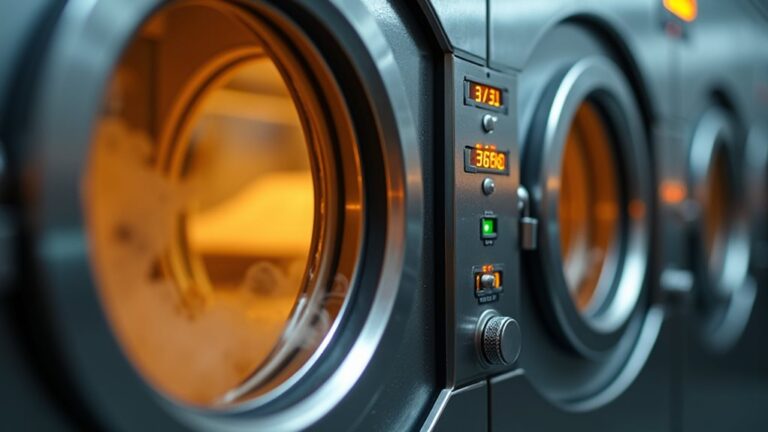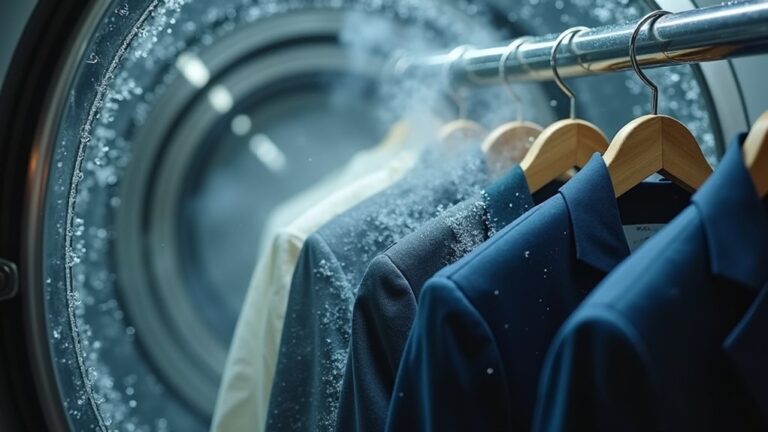
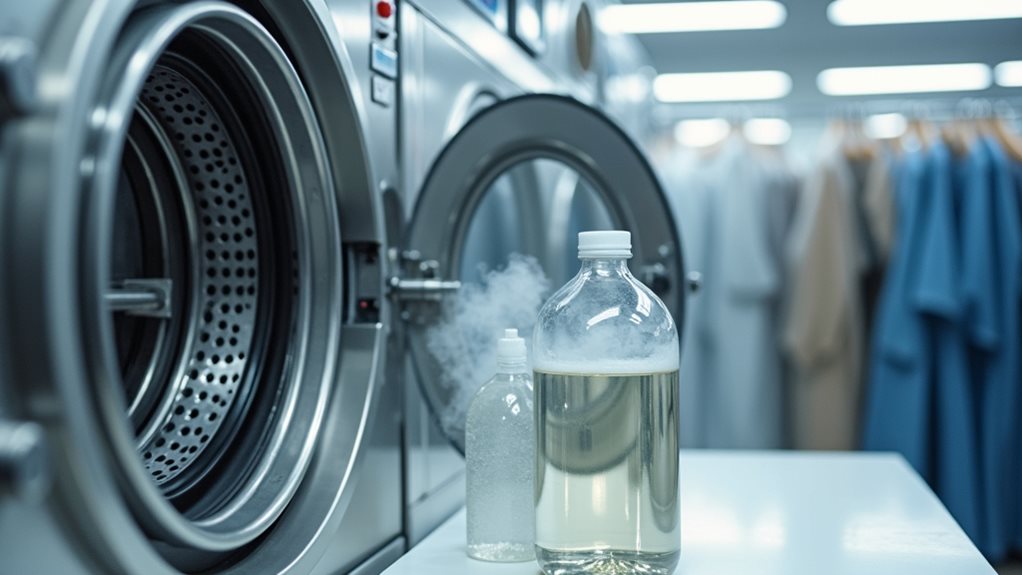

When you drop off your favorite wool coat at the dry cleaner, you’re fundamentally giving it a chemical bath instead of a water wash. The process uses specialized solvents like perchloroethylene that dissolve oil-based stains through molecular attraction, something water simply can’t accomplish. Your garments get tagged, pre-treated for stubborn spots, then gently agitated in these cleaning solvents before being dried and professionally pressed. Understanding the complete process reveals why certain fabrics require this crucial care.
The Science Behind Solvent-Based Cleaning
While most of us toss our favorite silk blouse or wool suit into a plastic bag and hand it over to the dry cleaner without much thought, there’s actually fascinating chemistry happening behind that counter that would make your high school science teacher proud.
The dry cleaning process relies on chemical solvents like perchloroethylene that work differently than water, dissolving stubborn stains through molecular attraction rather than traditional washing. These cleaning agents are particularly effective because they’re non-polar, meaning they grab onto greasy, oily messes that water simply can’t touch.
Modern dry cleaners are increasingly adopting environmentally friendly solvents like liquid carbon dioxide, which offer effective cleaning while prioritizing your health and our planet’s wellbeing through impressive solvent recovery systems. Other innovative alternatives include GreenEarth silicone-based solutions that provide excellent cleaning results while addressing environmental and health concerns associated with traditional solvents.

Professional Grade Formula: Specifically designed as a dry-cleaning solvent to safely remove oil-based stains, grease, and grime without using water.

Product Type :Janitorial Supply

Step-by-Step Dry Cleaning Process
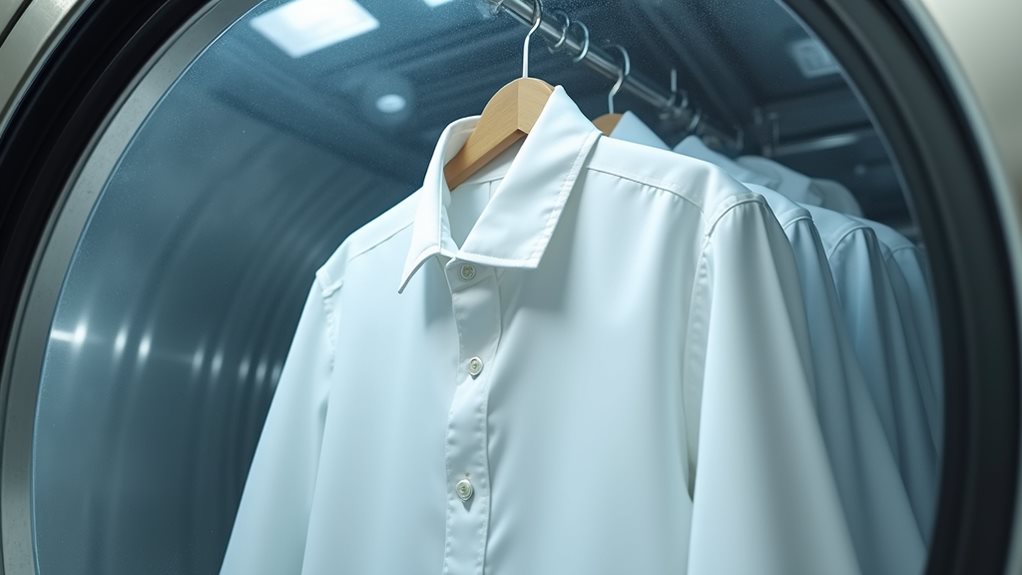
Five simple steps transform your wrinkled, stained garments into crisp, clean clothes that look like they just stepped off a magazine cover, and honestly, watching this process unfold is like witnessing a small miracle that happens dozens of times daily in dry cleaning shops across the country.
First, your clothes get tagged and inspected for stains, then pre-treated with specialized solutions that target specific marks.
Each garment receives meticulous attention during inspection, with professional-grade stain treatments applied precisely where needed for optimal results.
Next, they’re gently agitated in cleaning solvent—usually perchloroethylene or eco-friendly alternatives—inside specialized machines that lift away dirt and grime.
The drying cycle follows, where warm air removes solvent vapors while modern machines recover 99.99% of the solvent for reuse.
This method proves particularly beneficial for delicate fibers like silk and wool that could shrink or lose their shape in traditional water-based washing.
Finally, everything gets pressed to perfection, and voilà—your favorite outfit returns looking absolutely stunning!
Types of Solvents Used in Modern Facilities
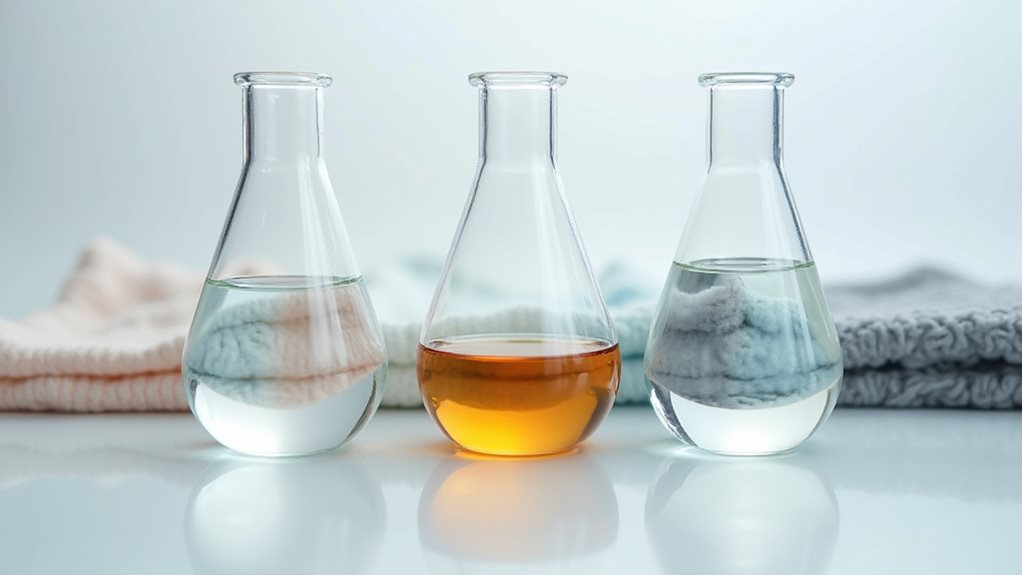
Understanding which solvents your dry cleaner uses might seem like chemistry class all over again, but trust me, this knowledge can help you make smarter choices about where you take your most treasured garments.
Traditional perchloroethylene remains the industry standard, though it carries health risks that’ve got regulators worried. You’ll find alternative solvents popping up everywhere—hydrocarbon solvent options offer safer cleaning with fewer toxic concerns.
Liquid carbon dioxide represents the ultimate sustainable option, delivering eco-friendly results without the environmental impact of traditional dry cleaning chemicals. Some facilities now use silicone-based solutions that balance effectiveness with safety.
These solvents work by dissolving grease and oil stains that regular water-based washing simply cannot tackle effectively.
When choosing your cleaner, don’t be shy about asking which solvent in dry cleaning they prefer—your health and clothes deserve that conversation!

✅ GENTLE ON HANDS, TOUGH ON PAINT: No paint thinner, no turpentine — just a powerful natural cleaner that removes wet or dry paint in seconds. Safe to use directly on your hands and brushes.

Lifts dirt in every room

Benefits and Limitations of Professional Dry Cleaning
Now that you know what’s actually cleaning your clothes, let’s talk about whether professional dry cleaning lives up to its reputation—and honestly, the answer depends entirely on what you’re hoping to achieve.
The dry cleaning industry excels with delicate fabrics like silk and cashmere, where traditional washing would be catastrophic, and it’s absolutely brilliant at tackling oil-based stains that laugh in the face of regular detergent.
However, cleaning without water creates limitations—those coffee spills won’t budge like they’d in your washing machine. Always check garment labels first, because sequins and certain synthetics don’t play nice with solvents.
Water-based stains like coffee are dry cleaning’s kryptonite—always check those care labels before trusting solvents with your garments.
The professional pressing and finishing process leaves clothes looking crisp and new, giving garments a polished appearance that’s difficult to achieve at home.
While benefits of dry cleaning include preserving fabric integrity and removing stubborn dirt and stains, limitations of dry cleaning include higher costs and ineffectiveness against water-based mishaps.

DRY-CLEAN SAFE: Safely removes stains on dry clean only clothes, delicates and hand-washables

At‑home dry cleaning kit refreshes delicates, wool, silk, and dry‑clean‑only clothes, removing odors, light stains, and wrinkles in minutes — perfect for everyday garments and special‑care fabrics.

The End of All Stains - Save your rug, carpet, clothes, mattress, upholstery from permanent stain damage - Incredible! Stain Remover is here to save the day, Our powerful formula eliminates various stains and odors - from coffee, red wine, oil, dog and cat urine, grease and more.
Environmental Impact and Sustainable Alternatives
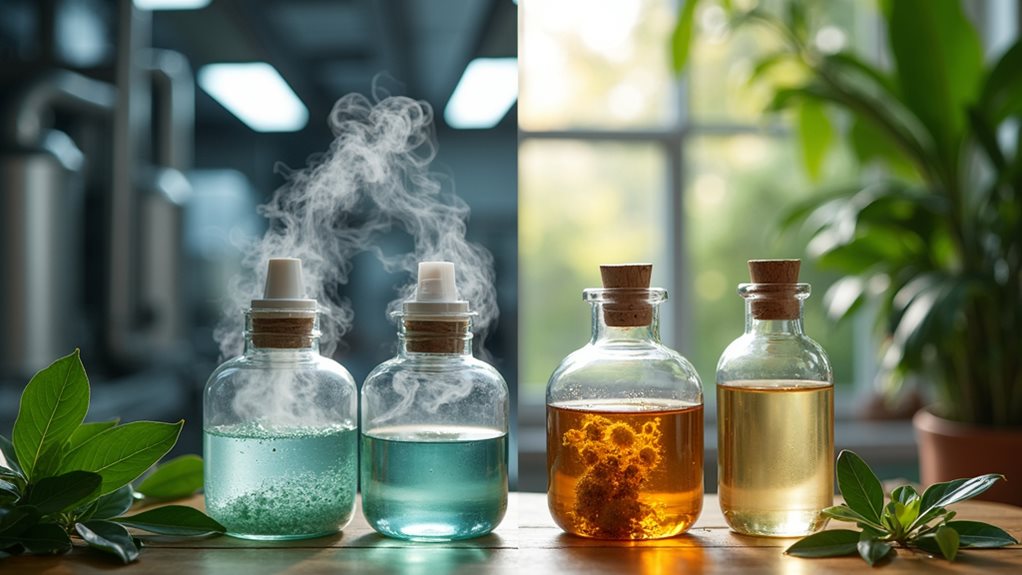
While your freshly cleaned silk blouse might look pristine, there’s an uncomfortable truth lurking behind those gleaming dry cleaning machines—traditional solvents like perchloroethylene (or “perc” as industry folks call it) have been quietly wreaking havoc on our environment and health for decades.
The environmental impact has been so concerning that the EPA finally banned perc from residential facilities in 2020, forcing the industry to scramble for sustainable alternatives.
Thankfully, innovative dry cleaning solutions are emerging that’ll make you feel better about your cleaning choices. Liquid carbon dioxide cleaning and biodegradable cleaning methods are revolutionizing the industry, while energy-efficient machines now recover 99.99% of solvents for reuse.
These eco-friendly alternatives prove that pollution reduction doesn’t mean sacrificing your garment’s quality—just smarter solvent reuse. Hydrocarbon-based cleaners offer another environmentally friendly option, being petroleum-derived solvents that maintain excellent cleaning effectiveness while reducing environmental impact compared to traditional perc.